When a Girl Stays in School, a Village Changes
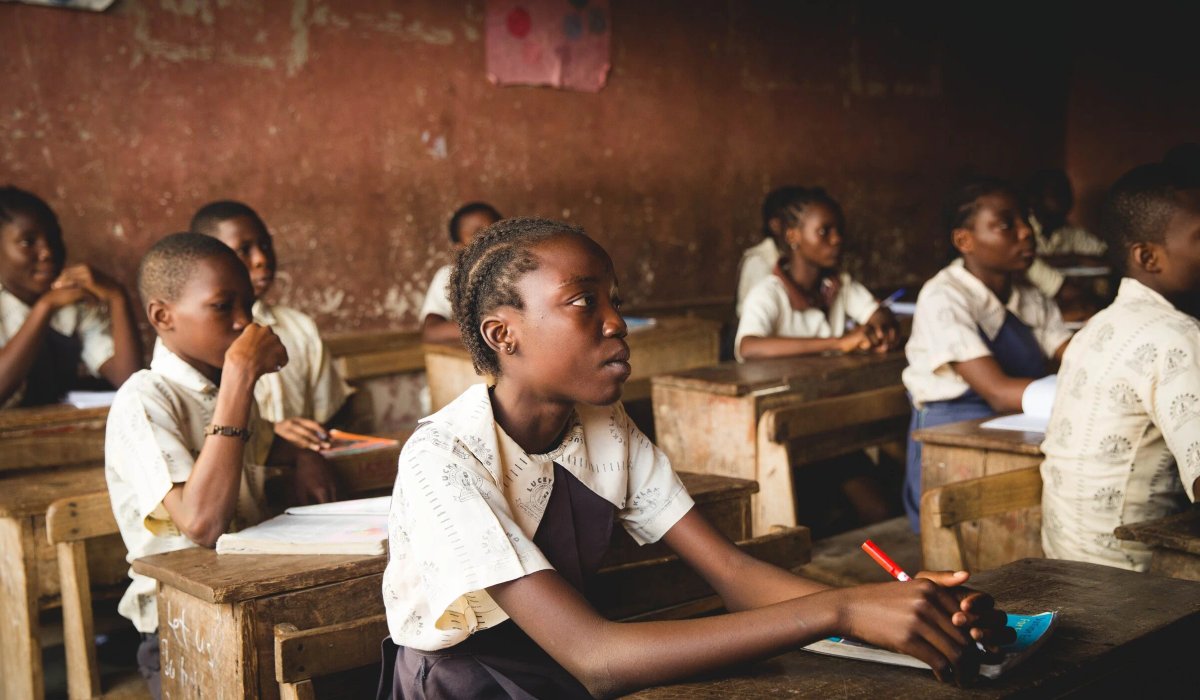
Adisa was twelve when her father decided she should stop going to school.
It wasn't cruelty. It was arithmetic. The family farmed sorghum on two acres outside Wa. Her two younger brothers needed school fees. The rains had been poor for three years. Adisa was the oldest, and she was a girl.
A KAPAW community liaison visited the household three weeks later — not to lecture, but to listen. She sat with the father for two hours. She talked about the data: that girls who complete JHS earn, on average, 25% more across their working lifetime than those who don't. She talked about the community: that in villages where girls' secondary enrollment rises above 60%, child marriage rates fall by nearly half within a generation. She talked about Adisa specifically: her grades, her teachers' reports, her own quiet ambition to become a nurse.
Adisa went back to school the following Monday.
The Dropout Gap in Upper West
The Upper West Region has the lowest girls' secondary school completion rate in Ghana. According to the Ghana Statistical Service, fewer than four in ten girls in the region complete JHS. The reasons are layered — economic pressure, early marriage expectations, long distances to school, inadequate sanitation facilities that make menstruation a weekly reason to stay home.
KAPAW's School Retention Programme addresses all of these, not as separate problems but as a single ecosystem of barriers that families navigate together.
What the Programme Does
Since 2022, KAPAW has worked with 14 communities across three districts in the Upper West Region. The programme has three pillars:
Household-level engagement. Community liaisons — always women, always from the region — make home visits to families where a girl is at risk of dropping out. They are trained in facilitated dialogue, not persuasion. The goal is to understand the family's specific constraints before any support is offered.
Material support. For families where economics is the primary barrier, KAPAW coordinates with district education offices to access the government's capitation grant and provides supplementary support for uniforms, sandals, and sanitary supplies. We do not give cash directly to households. We remove the specific cost that is the tipping point.
School-level infrastructure. In four partner schools, KAPAW has funded the construction of private, lockable female sanitation facilities. In communities where this has been done, reported menstruation-related absenteeism has dropped by 68%.
What the Numbers Say
Across the 14 communities, the programme has supported 312 girls since inception. Of those, 287 — 92% — are still enrolled. Of the 25 who did not continue, 11 were cases where the family relocated outside the district.
We are careful not to overclaim. We know that community liaisons, material support, and better toilets are necessary but not sufficient. Culture moves slowly. Economic shocks still happen. Some families we visit do not change course.
But 287 girls are still in school who might not have been.
Adisa, Two Years Later
Adisa is now in her second year of senior secondary school in Wa. She is studying general science. She wants to train as a community health nurse and, she told us when we visited last term, come back to her village when she qualifies.
She is one data point. She is also the point of all of this.